Enterprise platform · deployed inside your perimeter
Own the engine. Stop renting seats.
A single-core enterprise platform deployed on your own infrastructure — the modules your company runs, on one database, with the dashboards already in it. Start per application, or own it outright.
On-premise or your own private cloud · inference runs locally · no record leaves your network
The product
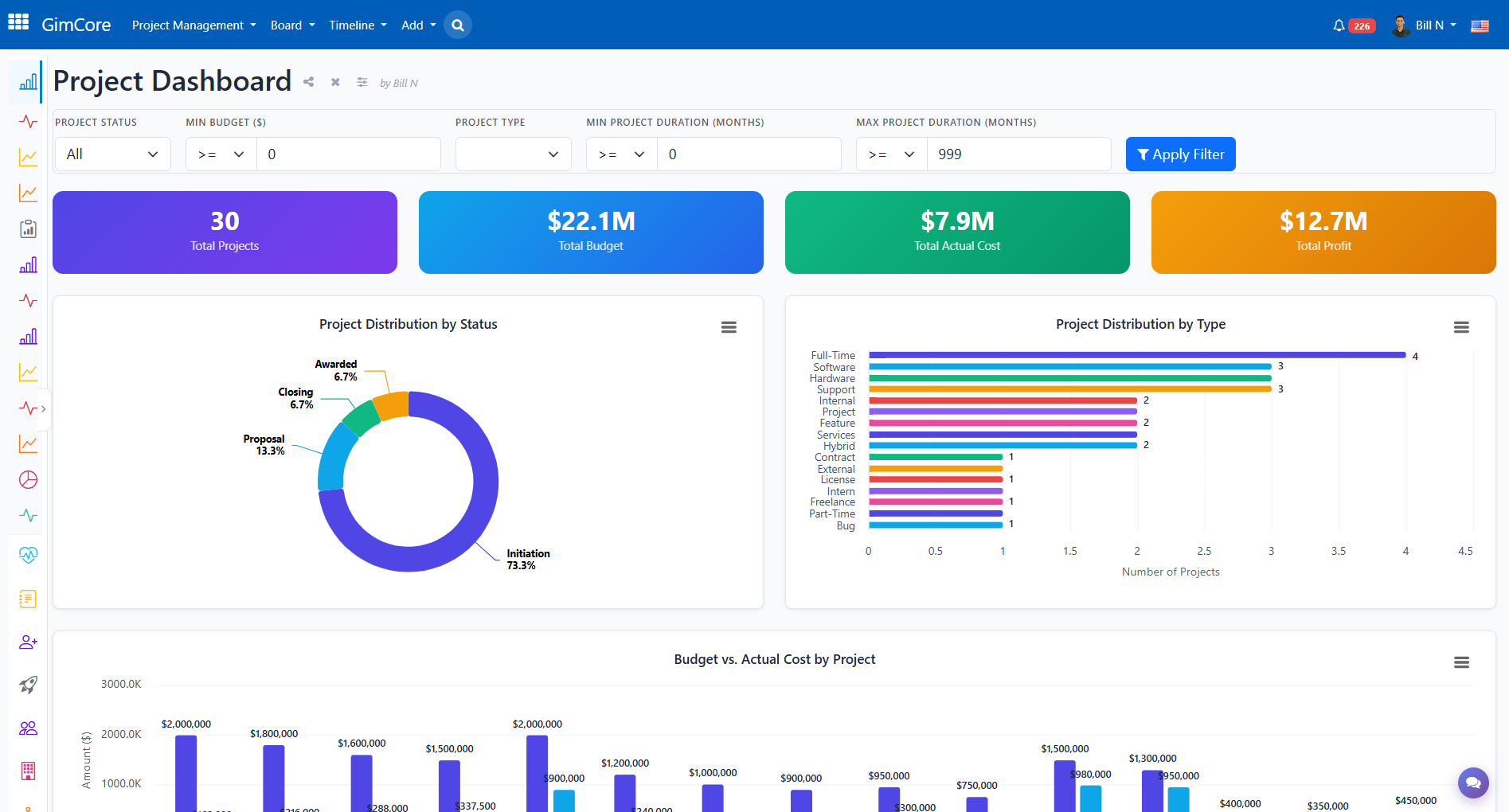
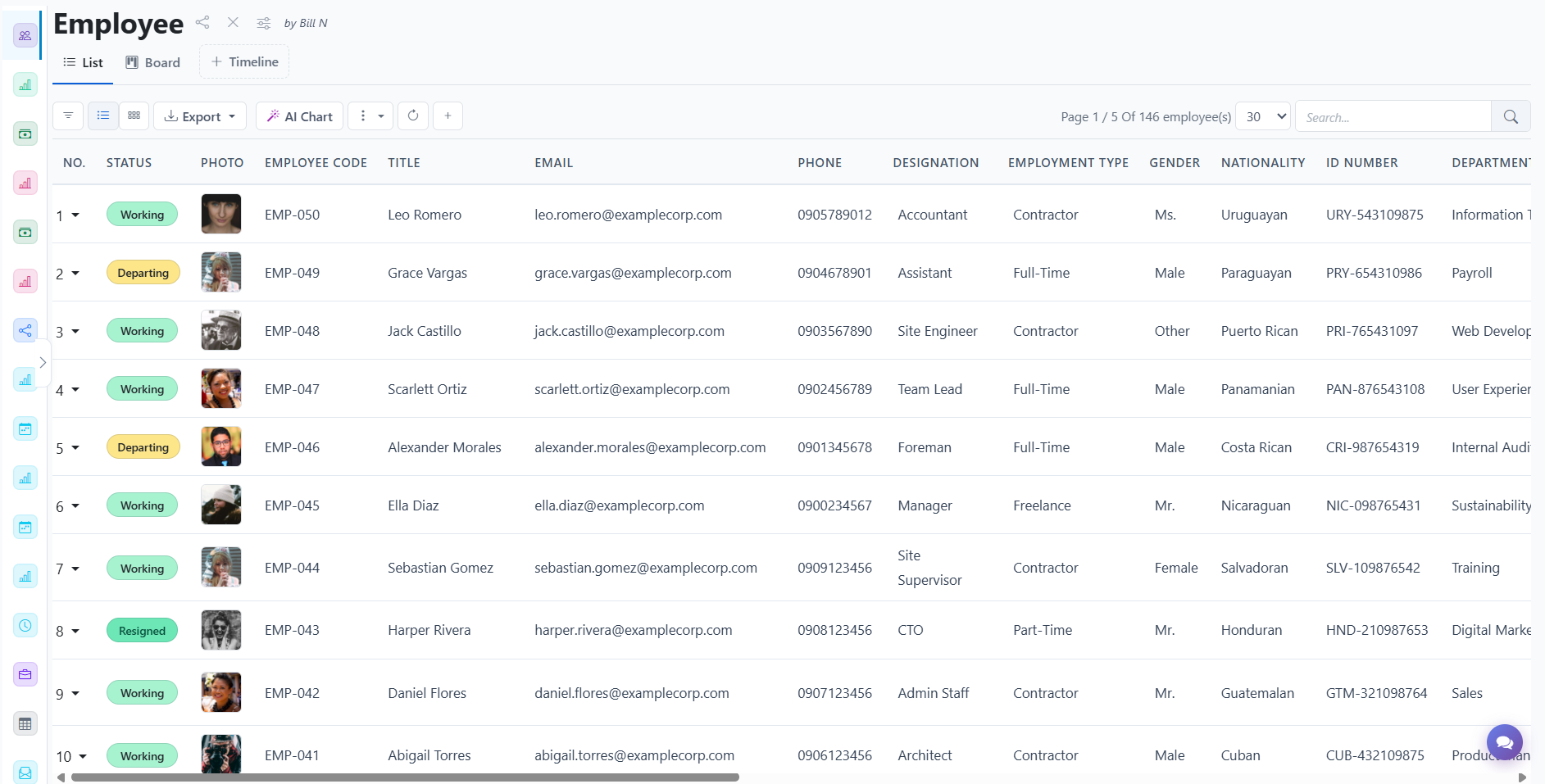
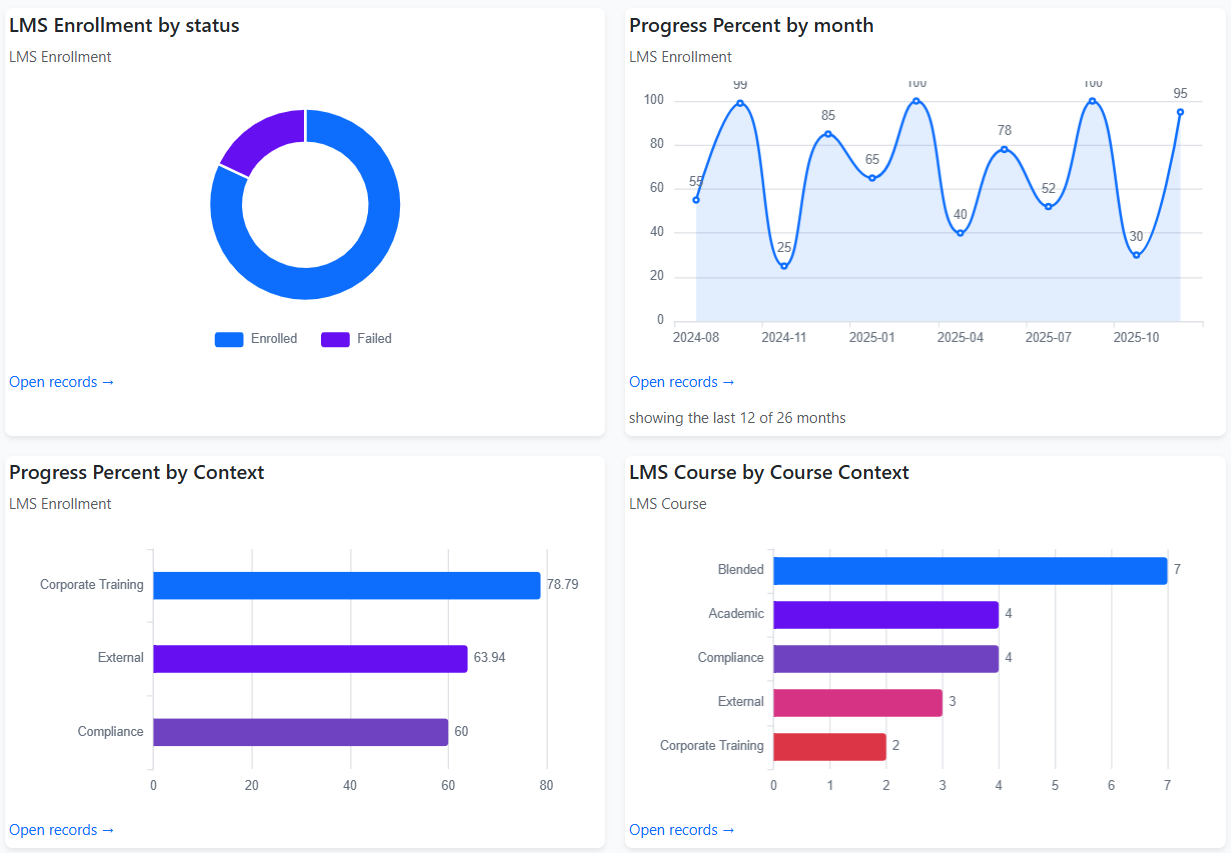
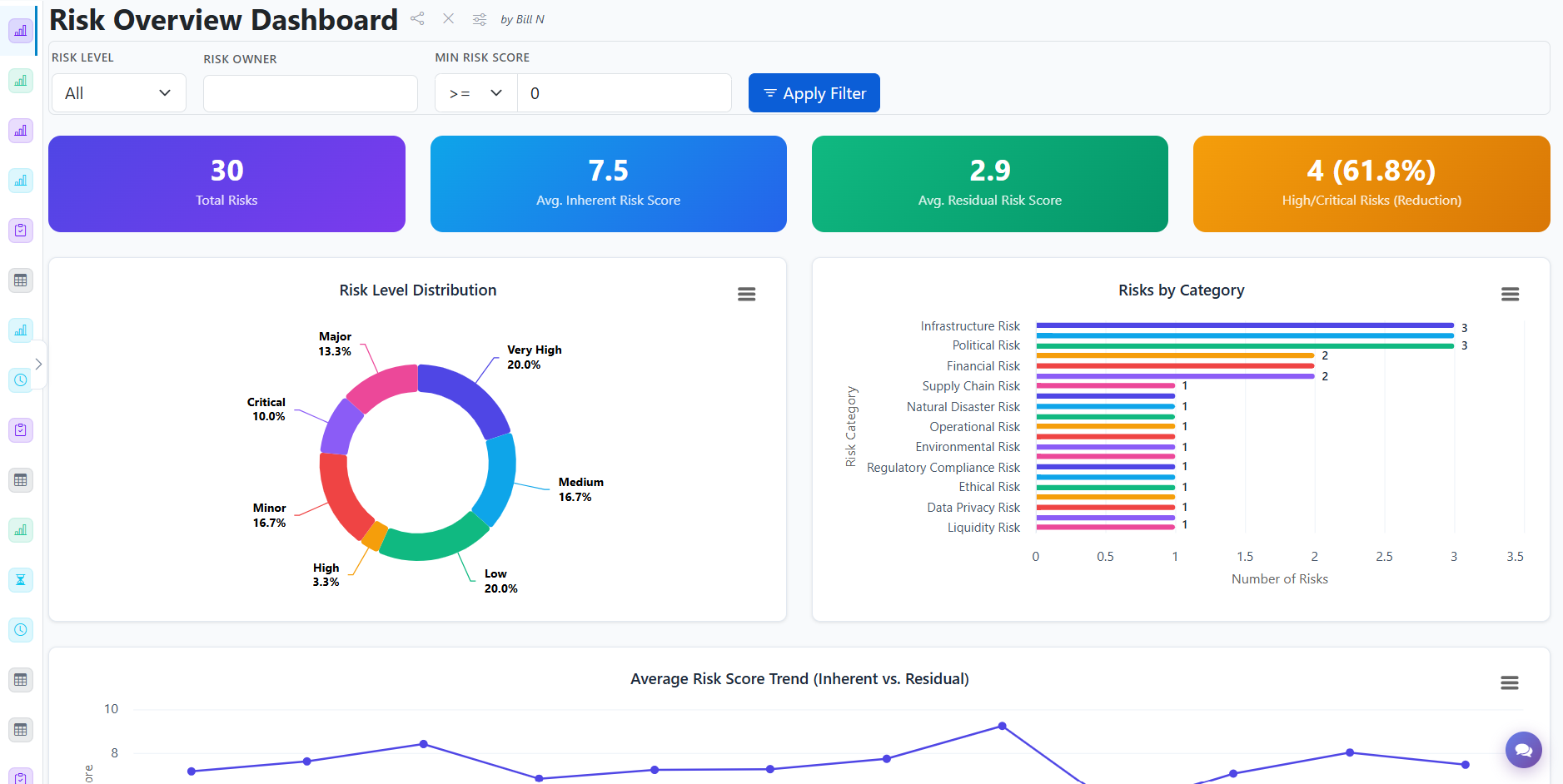
Records, lists and reports — already built
Not a toolkit you assemble. The screens your teams work in, the filters they need, and the charts a manager asks for, over the same records.
Why this instead of more seat licences
A rising rent with no residual value
Seat-based spend recurs indefinitely, rises with headcount and at every renewal, and leaves no asset on the balance sheet when it stops. Each additional system adds an integration surface, an identity boundary and an audit gap.
No rates are published here. The comparison is run against your own invoiced subscription spend, not against a market average. What is argued against is seat-based rent that leaves no asset — a GimCore subscription is priced per application, never per seat, and the fees credit toward the licence.
Integration debt
Point-to-point APIs between CRM, HR, finance and GRC. Every schema change is a project.
Identity boundaries
Each system has its own users, its own roles, and its own idea of who may see what.
Audit gaps
The trail stops at each system edge, which is exactly where an auditor asks the question.
Architecture
A single core, not a suite of connected products
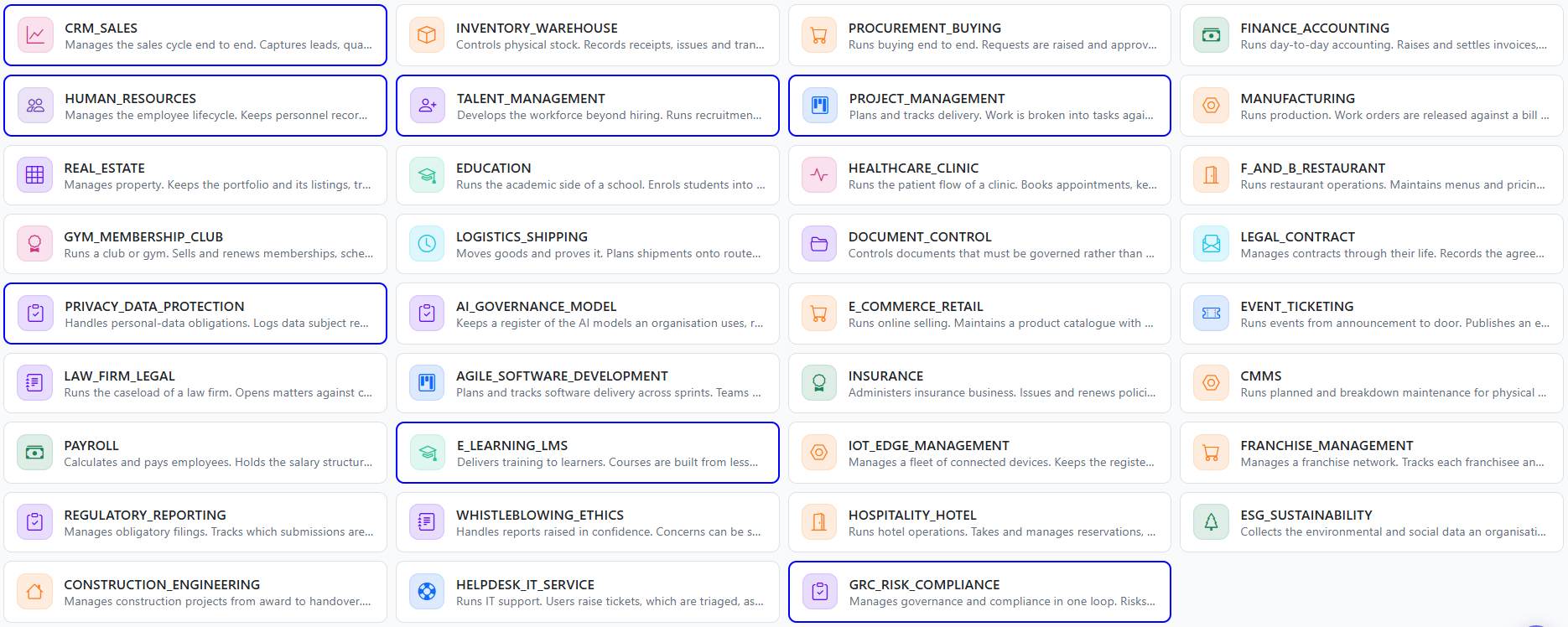
Application behaviour is defined in metadata over one database, so a record written by one module is natively readable by every other — without an integration between them. That is why the catalogue is this wide.
Extending it
What the catalogue does not cover, you describe
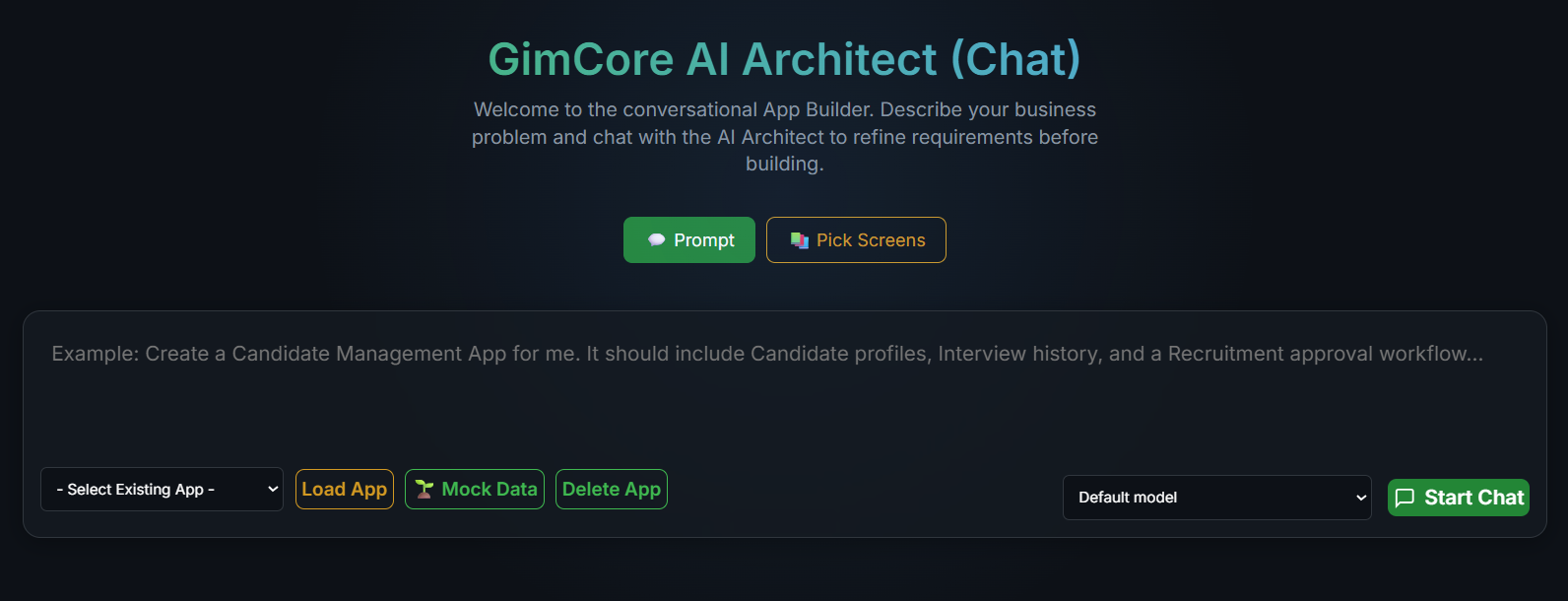
The thirty-five modules are the starting point, not the ceiling. A plain-language description is analysed, modelled and deployed as screens, fields, relationships and workflows — on your server, by a model running on your hardware.
Describe
The AI acts as a business analyst and deduces the requirements you did not state.
Review
It proposes the screens it heard — and the ones you forgot — and waits for approval.
Deploy
Screens, fields, relationships and workflows are created on your server.
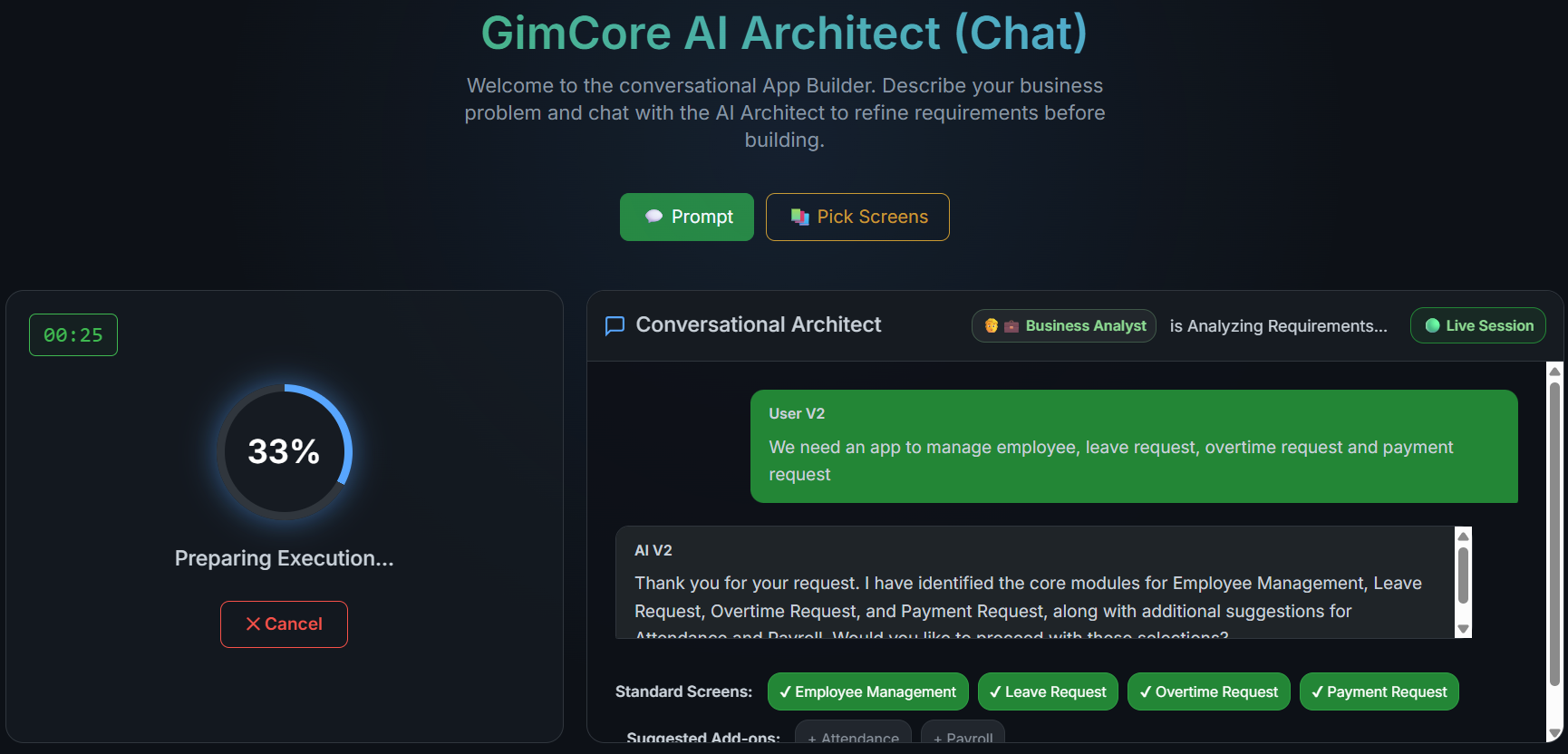
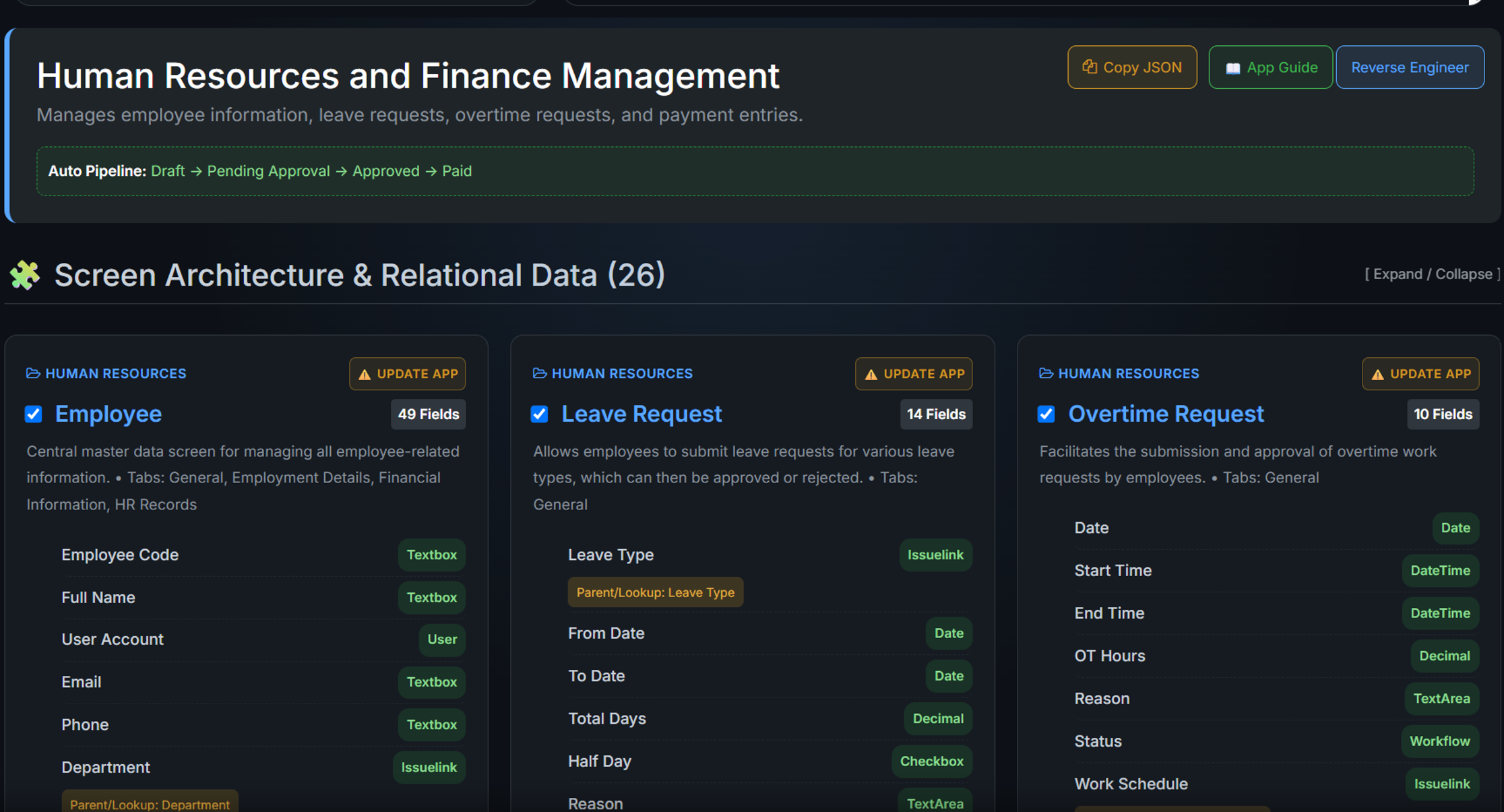
Under 15 minutes from written requirement to live application is a product specification, verifiable in a supervised evaluation — not a measured average.
Watch it happen
One sentence, one application
A recording of the build described above — a plain-English requirement typed in, the screens, fields and relationships proposed for review, and a working application at the end of it.
 Watch on YouTube — opens in a new tab
The video is linked rather than embedded, so this page makes no request to YouTube or Google unless you choose to watch. That is the same rule the platform follows with your records.
Adoption
Your staff work the system from the chat app
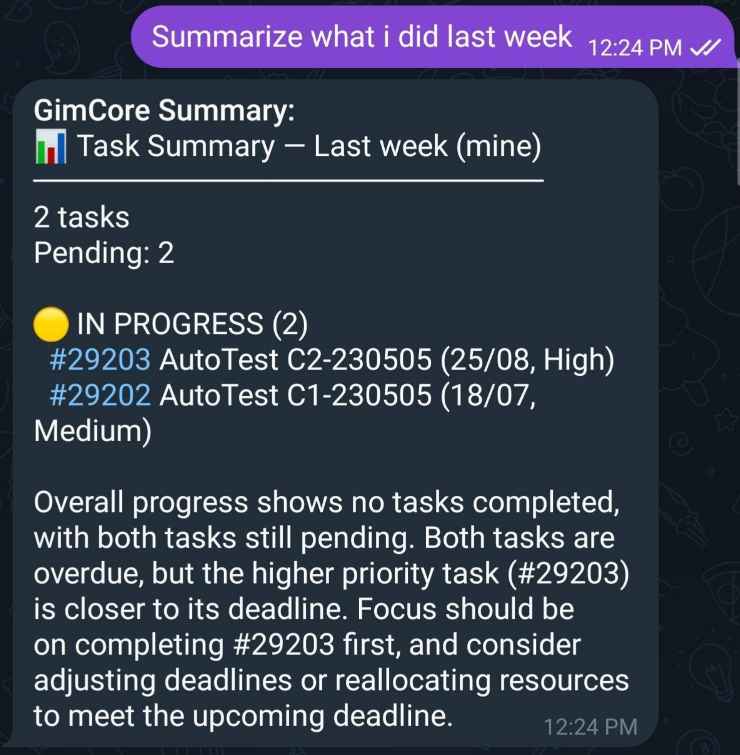
The hardest part of any platform is getting people into it. Records are created, found and summarised from the messaging app they already have open.
How the agent works →Create a record, list and search them, ask for a summary, or attach an invoice and have it become a claim — from the messaging app, without opening the platform. GimBot and the AI agent ship as part of GimCore: no separate product, no separate licence.
The agent
An agent is assembled from steps you can read
This one reviews contracts. It reads the screen, OCRs the signed PDF, extracts the fields with an AI step, then checks three rules — the advance is 50% or less, payment is due 30 days or more after invoicing, and a confidentiality clause is present. Compliant contracts are approved; a breach escalates to Legal.
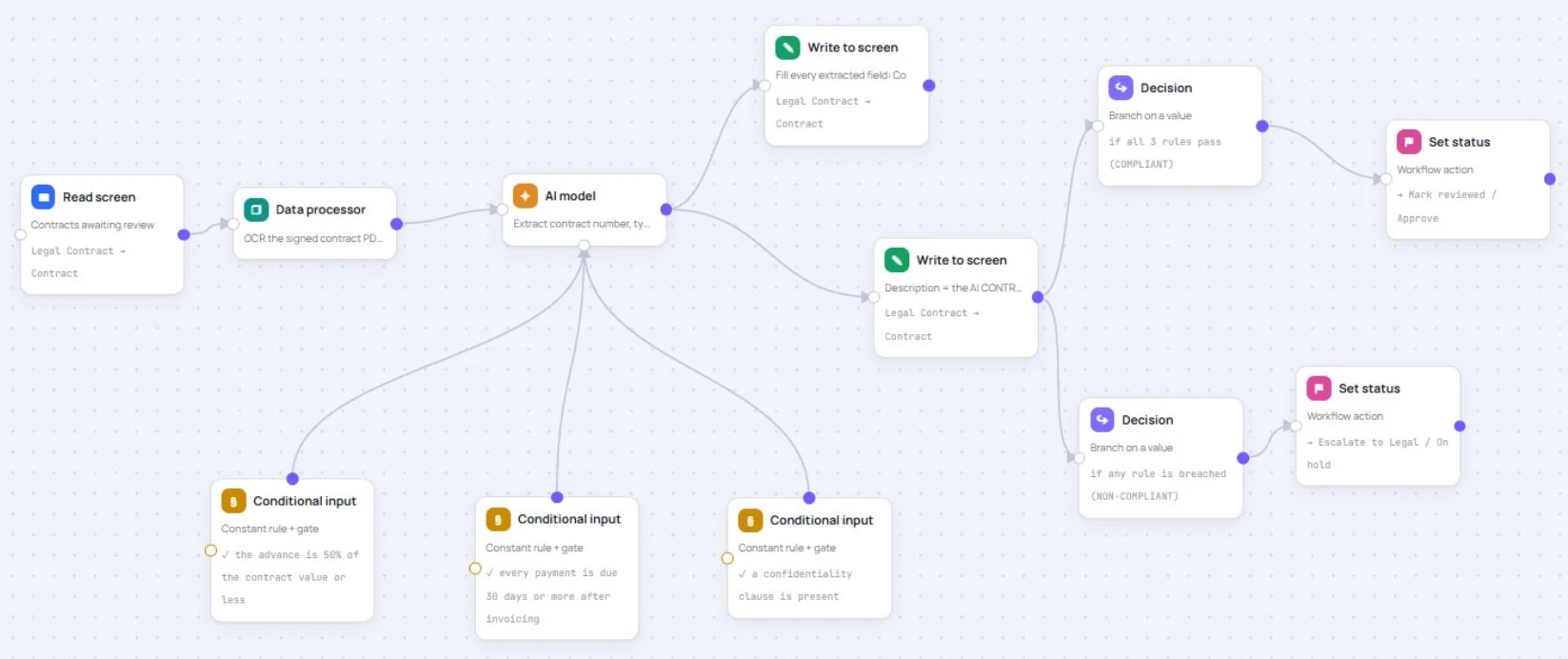
The conversational agent ships today. The multi-step builder shown here is in build and is demonstrated on a development deployment. Claim register →
Data sovereignty
Where the AI actually runs
Every component sits inside a boundary you control. The model runs on your hardware, so a prompt never becomes an outbound request.
- Local inference — Ollama or LM Studio, inside your perimeter
- Three-tier audit trail — interface, API controller and database
- ISO 27001 / SOC 2 / GDPR — architecture and control design alignment
- Your database — SQL Server, primary and optimised
- Source transfer — available under Tier 2
"Design alignment" is stated as design alignment, not as certification. The distinction is the deck's own, and it belongs on the page too.
Evidence
Every figure, with its status
The briefing deck carries a claim register. Putting it on the website is the cheapest trust you can buy — and it is what stops a number going stale in silence.
| Statement | Source | Status |
|---|---|---|
| 3,843 distinct field definitions | GimCore metadata dictionary | Measured · Aug 2026 |
| Under 15 minutes from requirement to live app | Product specification | Verifiable in evaluation |
| 100,000+ records rendered at 60 fps | Product specification | Verifiable on your data |
| ISO 27001 / SOC 2 / GDPR | Architecture and control design | Design alignment |
| Migration window | Import engine, in build | No figure asserted |
| Record-creating conversational agent | Creates, finds and summarises records from chat; an attached invoice becomes a claim | Shipping |
| Multi-step agent builder | Assembles an agent from screen reads, an AI step, rules and workflow actions; audited before it runs | In build |
| SAML 2.0 single sign-on | OIDC today (Entra ID, Google Workspace) | Delivered on request |
| PostgreSQL | SQL Server today, primary and optimised | Delivered on request |
Every row above carries how it is known. Anything not measured says so.
Commercial models
Three levels of ownership, and a way in
Start per application and let the fees credit toward a licence, or go straight to ownership — from a licensed deployment to a complete transfer of the source.
Start here
Annual subscription — priced per application
Pay for the applications you actually run, on your own infrastructure, with no seat metering at any headcount. Every fee paid credits toward a Tier 1 licence, so nothing is lost if you decide to own the engine outright.
Tier 1
Enterprise licence
Organisations of 100+ users needing a unified operating platform.
- On-premise or your private cloud
- Unlimited module access
- Standard support SLA
Tier 2
Source code licence
Complete source transfer for internal use. Priced against what building it would cost you — not per seat and not per year.
- Air-gapped deployment
- Full source transfer
- Internal use, no resale
Tier 3
Acquisition
For holdings and venture builders wanting the engine itself.
- Full buyout
- Vertical cloning rights
- Unrestricted commercial IP
No savings percentage is presented. The cost comparison is a structure we populate jointly during the evaluation, from three inputs: your current annual licence spend, your internal delivery cost, and the systems in scope.
The next step
A 30-day technical evaluation
No commercial commitment. The purpose is to replace every claim on this page with a measurement taken on your own data and your own infrastructure.